Now what for Venezuela?
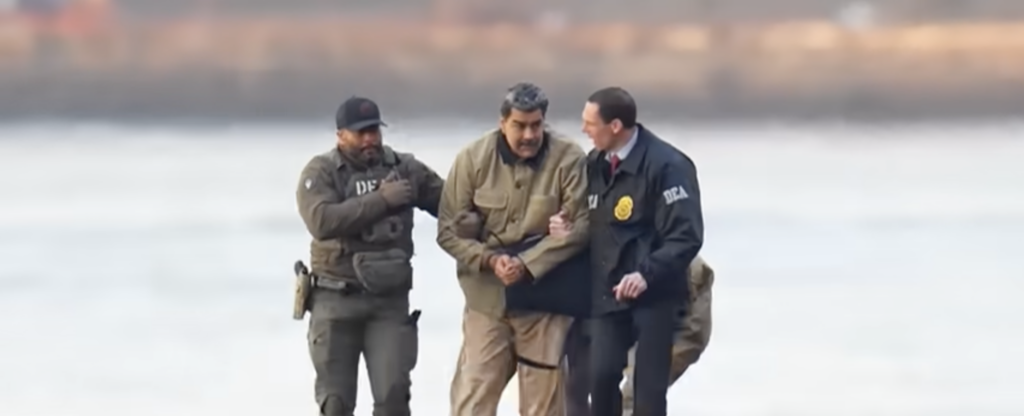
Well, my last column on the unfolding Venezuela situation hit the press just in time for events immediately after its publication to take a dramatic turn. In the early hours of January 3, 2026, U.S. Special Operations forces launched a raid into the Venezuelan capital city of Caracas that ended with the capture of Nicolás Maduro and his wife. The operation reportedly took less than three hours. Regardless of one’s opinion of the Trump administration, the operation itself was undoubtedly impressive. I still maintain that such a dramatic use of force aimed at ousting a nation’s head-of-state should have been met with at least a modicum of preceding congressional debate. But the Trump administration continued a decades long tradition of using the executive branch’s military authority in a defiant manner. Maybe one day either Congress will assert itself or the presidency will limit itself. (A kid can dream.)
At this point, what’s done is done. Perhaps this is for the best. An autocratic dictator and lackey of Moscow, Tehran, and Beijing has been removed from power. Despite protestations from the activist western Left, the Venezuelan diaspora around the world (which numbers in the millions) has been seen dancing and celebrating in the streets. Even The View’s Ana Navarro (who, it should be noted, is Nicaraguan by birth) had positive things to say about Maduro’s ouster. Democrats, many of whom as recently as 2019 and 2024 called for more pressure on Maduro’s government, are now struggling to come up with a policy position that doesn’t simply amount to “Trump bad.” According to Axios, there is infighting between Democrats over how to denounce the action without simultaneously looking weak or indecisive. Credit where credit is due to Congressman Josh Gottheimer (D-NJ) who issued a very clear and sober statement following the raid on Caracas.
There will undoubtedly be boatloads — see what I did? — worth of ink spilt over international law, precedence, executive authority, and regime change in the coming weeks and months. However, a large and looming question remains: How will this play out? The administration thus far is understandably applauding this achievement, but they have yet to delineate (at least publicly) what the next steps for Venezuela and its populace will be. So far, the only discernible statement has come from President Donald Trump who said, “We’re going to be running it [Venezuela] with a group, and we’re going to make sure it’s run properly.” In addition to what the “we” (presumably the United States) would be doing, who is this “group” that is being referred to?
That answer might lie in a Wall Street Journal report which claims that CIA personnel advised the Trump administration that it would be wise to back Maduro’s Vice President Delcy Rodriguez as interim leader of Venezuela. This came as a shock to many who predicted that either 2024 Presidential opposition candidate Edmundo González Urrutia or (even more bullishly) recent Nobel Peace Prize laureate María Corina Machado would be immediately talking the reigns in Caracas. Ludicrous claims that Trump chose Rodriguez over Machado because he believes that Nobel Prize is rightfully his ignore much more practical and historically literate motivations.
For starters, a full backing of Machado and/or González Urrutia would have likely required a full-on U.S. military intervention to install them as Venezuela’s new leaders. The remnants of the Venezuelan military would not welcome such a dramatic and immediate shift of political winds. So as to avoid turning Caracas into the western hemisphere’s version of Fallujah, backing Rodriguez as a means of slowly getting the Venezuelan military’s rank and file on board with political transition might be a very prescient and wise decision.
Building on the previous Iraq analogy, the Trump administration is also likely looking to recent history to avoid massive mistakes. In 2003, a huge mistake of the Bush administration in Iraq was its haphazard and sweeping policy of “de-Ba’athification.” Any Iraqi who was either a card-carrying member of Saddam Hussein’s Ba’ath Party or was a member of the Iraqi Army was put out of work overnight. Public schoolteachers were fired. Civil servants were forced to resign. Soldiers stopped receiving a paycheck. These disaffected Iraqis formed the basis of an insurgency that would kill thousands of Americans. By ousting Maduro but keeping some of his United Socialist Party of Venezuela functionaries in power, it avoids a power vacuum that could lead to chaos, insurgency, and war.
Now, all of this rests on an administration that will keep its eye on the ball and pressure Rodriguez to keep Venezuela moving in a direction that one day can hopefully see the likes of Machado rise to political prominence. The “Trump Corollary” to the Monroe Doctrine could very well produce good results vis-à-vis Venezuela. However, if the administration gets bogged down in other geopolitical controversies (namely a very stupid and sophomoric showdown over Greenland), then Trump could very well be snatching permanent defeat from the jaws of current victory.
As the kids say nowadays, we all will have to “monitor the situation.” As we watch and as we all undoubtedly throw rhetorical arrows at one another, let’s remember that what happens in Venezuela effects real people in real time. Venezuelans have longed for change in their country. Now that the die is cast, let’s make that change meaningful and stable.
I spoke with a Venezuelan friend this week about Maduro, Trump, and the path ahead. In a very detailed back and forth, she ended by saying “Chavismo has tormented too many families so this [path forward] will not be easy but yes, January 3 made our hope real! Our hope for change. Our hope to see family again. On January 3, our hope for peace became real.” Let’s indeed hope for the best for Venezuela even while we debate our domestic political squabbles. Because hope, as the Bible says, “anchors the soul.”
Jim Pomeroy, raised in Bucks County and a former congressional aide, works in higher education. He is the author of Alliances & Armor: Communist Diplomacy and Armored Warfare during the War in Vietnam.