Here’s hoping freedom comes to Cuba
I don’t usually get political. If you know me, you know I’m far more likely to share comic relief from life with six kids than something this heavy. And honestly, our world feels divided enough already, I don’t need to add my voice to that division. But as I scroll online right now, this has been weighing so heavily on my heart. I went back and forth, debating whether I should say anything at all — whether sharing what feels like a different perspective would only add to the noise.
But this isn’t noise. It’s memory. It’s from the heart.
If you grew up Cuban in an American world, you grew up with José Martí. His words weren’t literature to us. They were inherited memories and truth passed down by grandparents whose bodies left Cuba, but whose hearts never did.
I grew up watching my grandparents age and die far from the land they loved. I dreamed of walking the streets of Santiago with them, listening to their stories where memory and place finally met. That dream never came true, and that loss lives quietly inside me.
Seeing hope rise today in places where humanity has been crushed under cruel dictatorships, seeing people in Iran and Venezuela celebrating because they feel something they haven’t felt in a very long time, stirs a joy in my heart that’s hard to explain. It’s a feeling that, unless you’ve lived without hope, you can’t fully put into words.
I understand the fear that comes with moments like these: fear of war, fear of the unknown, fear that this could lead to something we can’t control. I get it. I have teenage children, one who won’t stop talking about joining the Marines, who could easily be pulled into something bigger. That fear is real.
But I also know what it means to live without hope.
And for the first time in my life, I feel something I once thought had died with childhood, like Santa Claus or the tooth fairy, the fragile possibility that Cuba could one day be free.
As people celebrate in these recent days, and if by the grace of God that long-awaited moment finally comes, I ask for grace in return. Please don’t meet it with anger or protest. Don’t let hatred for one party, one person, or one ideology blind you to what is truly happening for so many around the world. Try to understand that this hope did not appear overnight. It has lived quietly in my heart since the first moment I understood what exile meant.
My grandfather used to recite Martí’s words to me:
Yo quiero, cuando me muera,
sin patria, pero sin amo,
tener en mi losa un ramo
de flores, ¡y una bandera!
No me pongan en lo oscuro
a morir como un traidor;
yo soy bueno, y como bueno,
moriré de cara al sol.
The poem is short, but its weight is enormous. Martí is saying that even if he dies without seeing a free homeland, even if he dies in exile, he will not surrender his dignity. He will belong to no master. He will die in truth and in light. De cara al sol. His face to the sun.
When I was little, those words made me angry. Not because I didn’t understand them, but because the thought of my grandfather dying — of dying away from Cuba — broke my heart. It has been over 34 years since he passed, and now I understand.
The flag was never about death. It was about dignity. It was about loving your homeland so deeply that neither exile nor death could take it from you. It was about carrying a loss so heavy that even in death, the longing remains.
Every January 1, my parents and grandparents would take me to our local Cuban regional club. We would stand together watching the Cuban flag wave against the sky, wishing that this would finally be the year Cuba would be free. Today, if you visit my grandfather’s grave, you’ll find a lone Cuban flag resting there, quiet proof of a hope he carried his entire life.
He loved this country dearly. He was proudly American and deeply grateful for the shelter this nation gave him when he needed it most. But his heart still longed for sweet, beautiful Cuba.
Now, as a parent, I struggle with how to explain all of this to my children, who have grown up in a country that, while imperfect, is beautiful and has given us freedoms and privileges we often forget. A country where we can speak our minds without fear, where disagreement does not cost us our lives.
Even with all the political noise on every side, our repression will never compare to what so many have endured from women punished violently for how they dress, to mothers in Cuba who dared to question a system pressing down on their necks, surviving on ration books, stale bread, and silence.
For many Cuban families, Martí’s words are not just poetry. They are a promise passed down that identity survives exile, love survives borders, and faith survives time. Even when our people could not return home, Cuba never left them.
So yes, question governments. Question motives. Feel hesitant. Worry about consequences. Those questions matter.
But I ask you, as the daughter and granddaughter of Cuban political exiles, to recognize that this moment is bigger than any party, any ideology, or any political team.
This is not about sides.
This is about people who lived entire lifetimes without hope. People who never imagined they would see a day when they could raise their flags openly, without fear. People who, for the first time, are allowed to believe that freedom might actually be possible.
So today, I celebrate alongside all those countries and all those people who are tasting freedom for the first time.
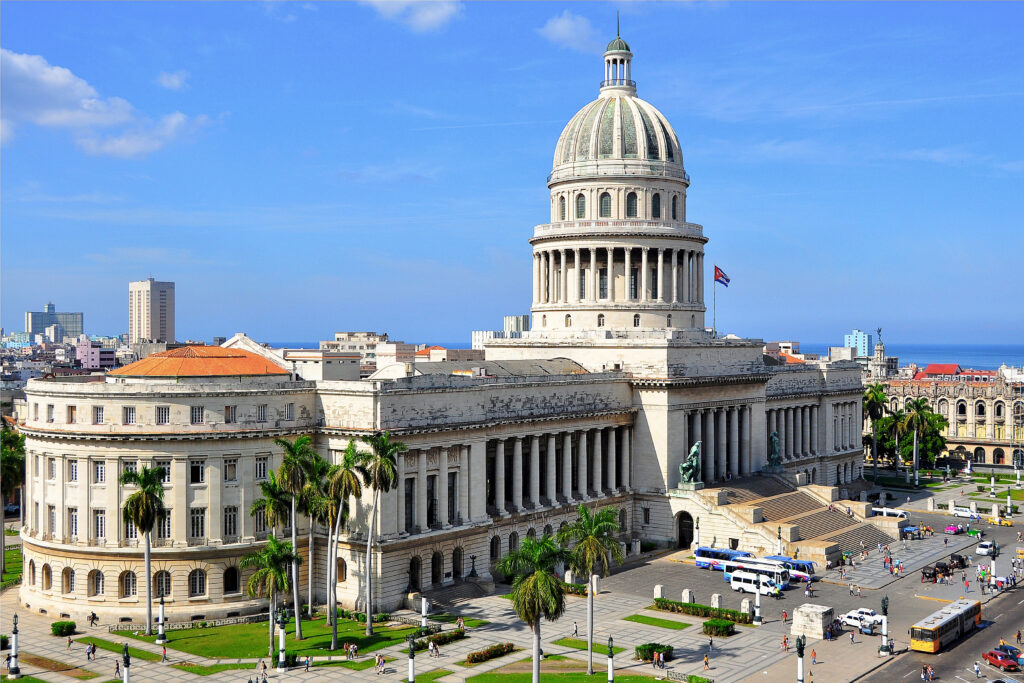
And to all the abuelas, abuelos, mamis, and papis who never lived to see their beautiful Cuba again, here’s hoping this is finally our year. That from heaven, you can feel the breeze over the island you loved, see the flag rise without fear, and know that the Cuba you carried in your hearts has, at last, found its freedom.
This isn’t about politics.
It’s about love.
It’s about memory.
And it’s about a longing that never left us.
Elia Garrison lives and writes in Bedminster Township.