Can science keep us younger even longer?
Do you remember the saying, 50 is the new 30? I do, but now 70 is the new 50!
Global life expectancy has increased from 32 years in 1900 to over 70 in 2021. According to the World Health Organization, individuals aged 60 and older expect to nearly double to 2.1 billion by 2050. Also, the number of people living to 100 is rising.
Per PubMed Central, research has shown that longevity has increased due to better and more accessible health care, improved sanitation, better knowledge of nutrition, increased awareness of sanitation and healthier living habits.
Yet, while average life expectancy has gone up, some studies suggest that human lifespan may be reaching its upper limits. Medical science has successfully reduced deaths in earlier life which allows more of us to reach old age. However, our bodies haven’t evolved the capacity to maintain themselves much beyond our current maximum lifespan. While people are living longer, they are suffering old age complications like diabetes, bone issues, heart disease, or cancer.
According to the Harvard T.H. Chan School of Public Health, while average life expectancy has gone up, our maximum lifespan has not changed. Medical and public health advances have not yet slowed down human aging. The Harvard paper also states, “unless the process of biological aging can be slowed, radical human life extension is implausible in this century.”
Evolution has shown it doesn’t care about how long an animal lives; it cares about its ability to pass its genes onto the next generation. Some laboratory experiments showed that when food was scarce, the simple organisms (e.g., fruit flies, worms, and mice) could slow their aging process. These organisms slowed their growth and reproduction, both of which need energy, and just focused on maintaining their bodies. The creatures waited out the famine and lived longer.
But when these lab subjects are given all the food they can eat, they live energetically, reproduce, and die younger. Restricting their diets by 20 percent to 30 percent fewer calories created longer life spans and also prevented them from developing cancer and cardiovascular diseases. Science has not been able to prove that humans could increase their lifespan by eating less food because the scientists would need to follow hundreds of people for many years, which makes this kind of experiment difficult.
However, scientists can measure the biological age of a person and test whether they are aging faster or slower than their chronological age would predict. Scientists can test through clinical trials on restricted feeding and intermittent fasting on humans; they just don’t have definitive data yet.
The good news is the emergence of geroscience, which pertains to aging biology, a subfield that didn’t exist 30 years ago. So far, research has shown that age-related diseases are linked to dysregulation in metabolism. Young people metabolize nutrients more efficiently. They burn sugar during the day and fats at night. Older people are less able to do that. Science needs to understand why this and other cellular functions change as we age. Combining that research with drugs and behaviors could give answers to healthy longevity. Biological and social factors may help certain people age better. Other factors such as genetics, metabolism, diet, and social integration could help some people age better.
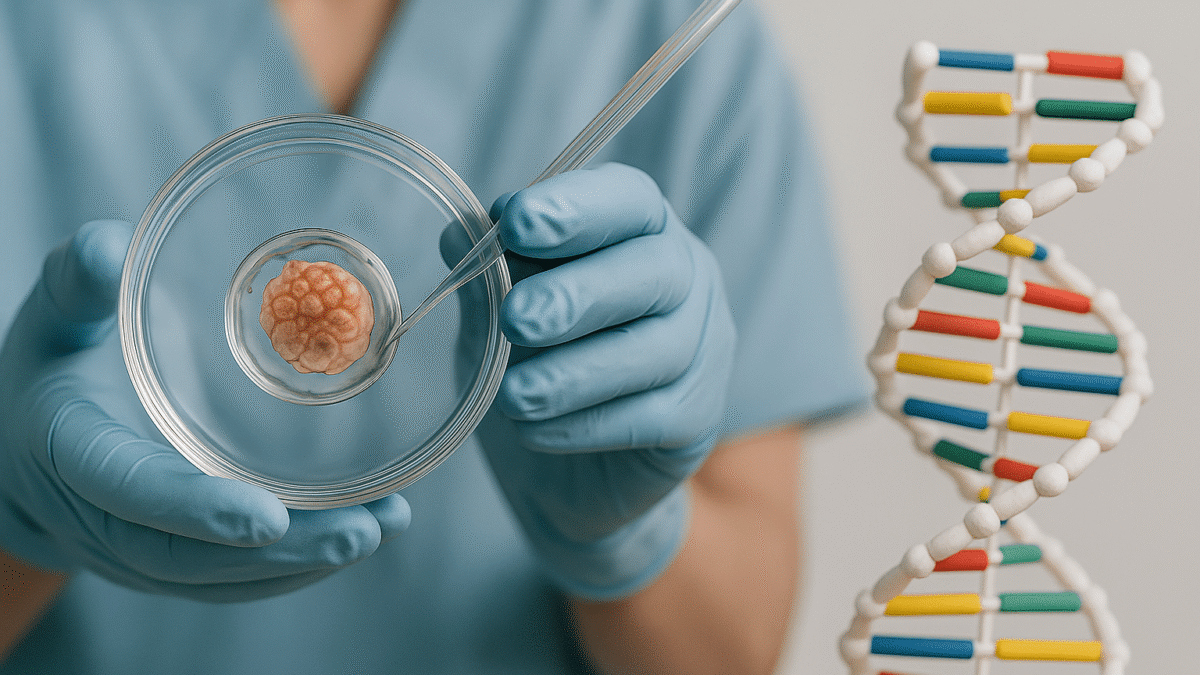
Scientists are also looking at tissue rejuvenation, which could change the actual biology of human aging. But this research is still very new. Research into turning adult calls back into stem cells, which could slow cell and tissue aging or even revert cells to more youthful states, could prove to be very helpful. So, the question remains, might science keep us younger longer, quite possibly in the future, but not just yet?
We need to be aware of the possibilities without being sucked into snake-oil promises to keep us living younger and longer. We can improve our healthy eating habits and be more consistent with our exercise to make our lives more viable, worthwhile, and fun.
Our desire to live positively and purposefully should give us a more balanced existence, which should in turn make us feel younger and healthier.
If 70 is the new 50 or 80 is the new 60 — whatever — the fact remains that we have more opportunities to enrich ourselves through information podcasts and other cerebrally stimulating media output so our minds are more active.
In short, we can improve the quality of our lives as we age, if we are determined to do that by taking advantage of the opportunities available to us. But so far, science — despite current work on geroscience — is not yet able to make our cells or tissues younger or keep us younger overall. Ultimately, it all depends on your individual attitude to make life the best you can with the tools you are given.
The good news is that geroscience gives us something to look forward to.
Carol Dubas is the author of Tripod: How Two Teenage Boys Inspire An Entire Community. She lives in Lower Southampton Township.