The boiling cauldron in the Middle East
To Americans, Operation Epic Fury is as much a war of words as it is a war of bombs. We Americans are witnessing a devastating real war in our living rooms – amid aggressive rhetoric on both sides and partisan opposition within the Congress.
But are we paying attention? I believe most Americans are aware of today’s military action via TV, rather than Iran’s tyrannical regime of the last 47 years, or the course of recent diplomatic negotiations, or our government’s search for peace and freedom in the ever-boiling Middle East.
We hear a war of words through the media and may be inclined to view it through the partisan glass or what you think of President Donald Trump. I thought the naming of the weeks-old war describes the frustration our leaders have had negotiating with Iran and its refusal to discontinue a nuclear enrichment program — or the nuclear threat it poses to the region and beyond. Possibly, many of us are not thinking of a global impact as we watched the war “movie” in our living rooms, or even on our phones.
The timeline began when diplomatic efforts in Iran fell apart, warnings of hellfire failed to bring about resolution, and America unleashed an astonishing barrage of 21st-century armament aimed at Iranian leadership, its national infrastructure, and, most of all, underground nuclear enrichment and missile sites.
As an average American with no inside information but an interest in a peaceful world, I interpreted the news of foundering negotiations, along with dire threats from the now-deceased Ayatollah Ali Khomeini as well as daily televised warnings from our president as worrisome, and, moreover, historically unusual. (What other president, what other war?)
The war of words continues to dominate the president’s social media and White House press conferences and has ignited strong partisan opposition, but the words and warnings failed to dissuade most of us from concerns about jobs, taxes, and the cost of everything.
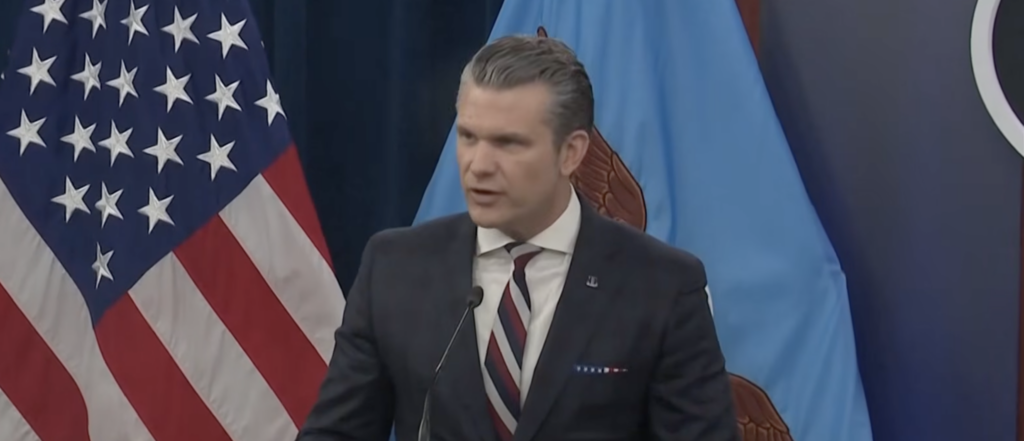
Public pronouncements from the president and Secretary of War Pete Hegseth fell as warning bombs to the “sick and sinister” Iranian despot: Hit as you’ve never been hit before, massive and ongoing operation, with overwhelming strength, devastating force, elimination of imminent threats. Obliteration!
Along with ominous rhetoric, the administration told us Iran had the ability to reach cities in the United States with its intercontinental missiles. There’s little argument with the recognition that Iran posed a threat to freedom and security in the region, but also the U.S.
Politics never dies, and Democratic leadership threw another anti-Trump log on the fire during the attacks on Iran, accusing the president of violating the Constitution, and citing the War Powers Act of 1973, which mandates congressional approval.
On Wednesday, the Senate, along party lines, voted down a measure to restrict the president’s military action in Iran. Senator John Fetterman (D-PA) was the single Democratic vote against and Senator Rand Paul (R-KY) the lone Republican vote in favor. One day later, the House also voted down the bipartisan resolution by a narrow margin.
Congressman Brian Fitzpatrick (R-PA-01), senior member of the House Intelligence Committee and chairman of the Central Intelligence Agency Subcommittee voted against the resolution and issued a prepared statement which is available online. The Bucks County congressman underscored the threat posed by the Iranian regime and focused on the importance of supporting freedom-seeking Iranian people. He described the resolution as too broad and poorly worded.
Part of the statement is as follows:
“For decades, the Iranian regime has methodically built a network of terror, proxy militias, missile proliferation, and regional coercion designed to destabilize the Middle East, threaten American interests and openly calls for the destruction of sovereign nations.
“It arms and funds Hezbollah, Hamas and other violent actors, orchestrates attacks against our allies, detains innocent civilians, and brutally suppresses its own people. It remains the world’s foremost state sponsor of terrorism.”
Thus, a nuclear-armed Iran is not an option, he also said.
In his statement, the congressman argued that our national security must be matched by fidelity to the Constitution, and any sustained or expanded military engagement should be done with the advice and consent of Congress.
The resolution before the House, however, had such sweeping language that it could jeopardize decades-long CIA and defense programs that protect Americans and U.S. service members in the Middle East from potential attacks carried out by the Iranian regime. Fitzpatrick also called the poorly worded, overly broad resolution not something anyone who understands national security apparatus, could or should support.
Indeed, the war of words needed the congressman’s clarity and intelligent insight leading every newscast. As usual, the “noise” caught the attention of the media and unfortunately was ignored by the late Ayatollah.
For many Americans, the 24/7 military videos of actual bombings, air and sea power, destruction, and daily blow-by-blow conflict reports from the president may come across as politically charged and so distant as not likely to affect us. That takeaway would be a mistake.
Pat Wandling hosts Speak Your Piece weekdays at noon on WBCB 1490.