Pennsylvania sues over Trump’s new global tariffs
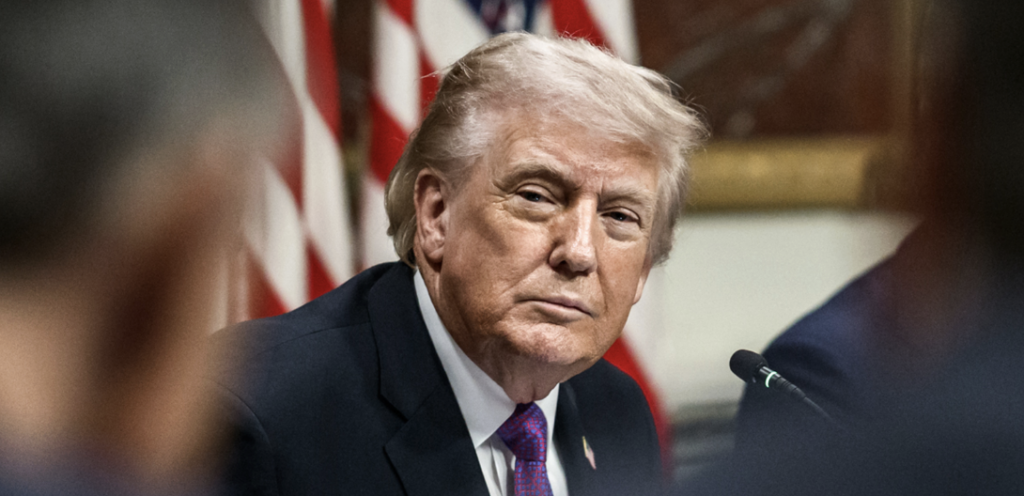
Pennsylvania has joined with over 20 other states in filing a lawsuit that challenges President Donald Trump’s new global tariffs.
Trump imposed tariffs up to 15% a day after the U.S. Supreme Court struck down his taxes on imports that he had put in place over the past year. He has said the tariffs are essential to reduce America’s longstanding trade deficits. Trump imposed duties under Section 122 of the Trade Act of 1974 after the Supreme Court decision.
Section 122, which has never been invoked, gives the president temporary authority to address serious balance-of-payments deficits or significant declines in the value of the U.S. dollar. It is designed as a short-term economic safeguard tool, allowing the administration to respond quickly to international financial instability or trade imbalances. Actions generally cannot exceed 150 days unless extended through other trade authorities.
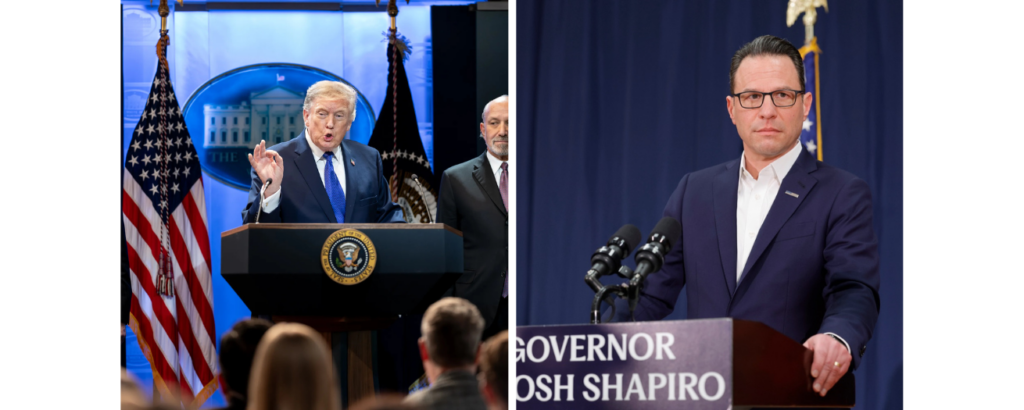
In a 28-page complaint filed in the U.S. Court of International Trade, the 21 attorneys general, along with Pennsylvania Gov. Josh Shapiro and Kentucky Gov. Andy Beshear, claim the president is unlawfully relying on the Trade Act of 1974 to impose illegal tariffs for political ends.
“The Supreme Court got it right — but instead of following the law, Trump decided to double down,” tweeted Shapiro.
“This President’s tariffs have done nothing but cause chaos and raise prices for our farmers, small businesses, and families. I’ve gone to court before to protect Pennsylvanians from the costs of this disastrous trade war — and I’m ready to do it again.”
The lawsuit is led by attorneys general from Oregon, Arizona, California and New York.
It argues that Trump can’t pivot to Section 122 because it was intended to be used only in specific, limited circumstances — not for sweeping import taxes. It also contends the tariffs will drive up costs for states, businesses and consumers.
Section 122 arose from the financial crises that emerged in the 1960s and 1970s when the U.S. dollar was tied to gold. Other countries were dumping dollars in exchange for gold at a set rate, risking a collapse of the U.S. currency and chaos in financial markets. But the dollar is no longer linked to gold, so critics say Section 122 is obsolete.
“The legal reality is that courts will likely provide President Trump substantially more deference regarding Section 122 than they did to his previous tariffs under IEEPA,’’ wrote Peter Harrell, visiting scholar at Georgetown University’s Institute of International Economic Law, in a commentary Wednesday.
The specialized Court of International Trade in New York, which will hear the states’ lawsuit, wrote last year in its own decision striking down the emergency-powers tariffs that Trump didn’t need them because Section 122 was available to combat trade deficits.
Trump does have other legal authorities he can use to impose tariffs, and some have already survived court tests. Duties that Trump imposed on Chinese imports during his first term under Section 301 of the same 1974 trade act are still in place.
Also joining the lawsuit are the attorneys general of Colorado, Connecticut, Delaware, Illinois, Maine, Maryland, Massachusetts, Michigan, Minnesota, Nevada, New Jersey, New Mexico, North Carolina, Rhode Island, Vermont, Virginia, Washington, and Wisconsin.
Steve Ulrich is managing editor of Politics PA.