Open primaries are a bad idea
I am opposed to open primaries.
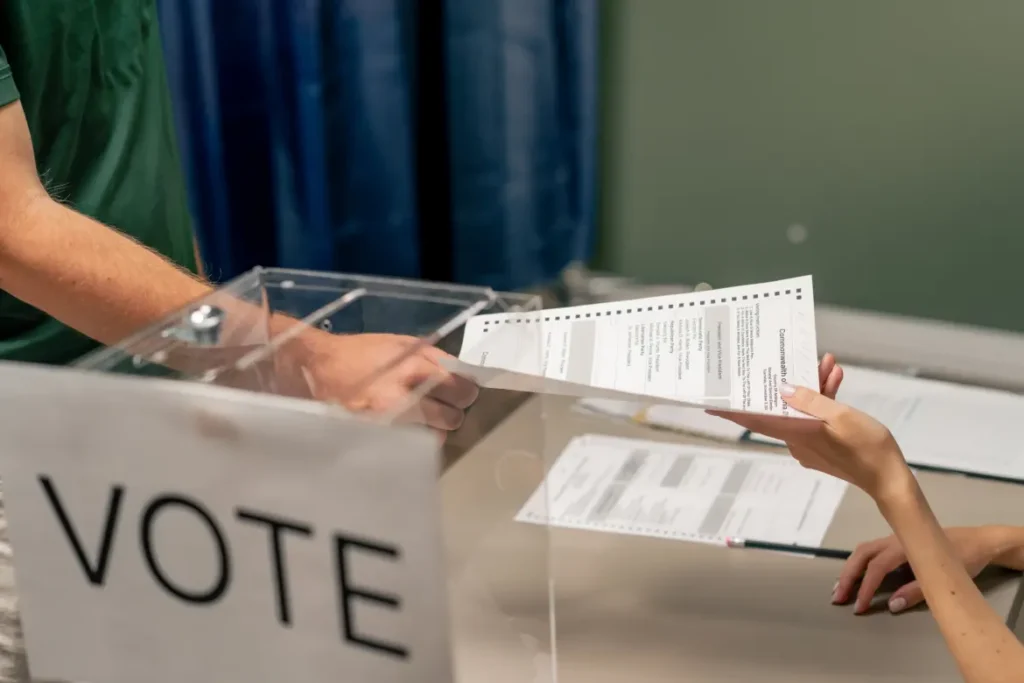
Because Pennsylvania is a closed-primary state, Republicans and Democrats can only vote on the nomination ballot of the party in which they are registered, while unaffiliated or independent voters cannot vote in primaries (other than on ballot propositions).
Opponents of the closed system say it “disenfranchises” independent voters who have a choice only in the general election between two party-selected candidates. And there are many independent voters out there. Forty-five percent of U.S. adults identified as political independents early this year, while equal shares of U.S. adults, 27 percent each, identified either as Republicans or Democrats. It’s conceivable in an open primary that a group of independents could swing a primary election.
Typical proponents of the closed primary, like me, don’t want to see a majority of independent voters choosing the candidates to represent our parties in the general election. And regarding the so-called disenfranchisement — by opting out of political affiliation, independent voters eliminated themselves from voting in Pennsylvania primaries.
If we had an open primary here, independent voters could influence the Democratic primary on May 19 when there is a contest between Bucks County Commissioner Bob Harvie and Lucia Simonelli, both of whom want the chance to unseat Republican Congressman Brian Fitzpatrick in November’s general election. Now Harvie must get through a primary against the more progressive Simonelli, who could attract less traditional Democratic votes — if it were an open primary. On the Republican side, Fitzpatrick is unopposed. Interestingly, Harvie is in favor of the closed primary while Simonelli and Fitzpatrick would both prefers open primaries.
I can somewhat understand the point about disenfranchisement argument, but that is ultimately unaffiliated voters’ choice, after all. Some of them are independent spirits who can’t decide where they stand on the political spectrum while others are just private people who don’t want to make their leaning a matter of record. But there are others who can organize a block of anti-whomever in an open primary and upend a traditional candidate. It makes sense, to me, to keep the closed primary a part of our two-party system.
Some people will always bemoan politicians and political parties. But a political party is an organization, with rules and responsibilities, as well as an association of like-minded people who believe in their party’s principles and governing abilities. Each party’s leadership wants to win, to get their candidate into the driver’s seat and make things happen – their way.
An open primary does not help the political parties add to their “team” numbers either in terms of their volunteers or their committeepeople. It can actually weaken the party. Independents may tend to vote in the big elections and get less interested in off-year elections, but the down-ballot candidates for state, county, and local positions count on a strong party of volunteers in the off-year elections.
Whether nomination elections are open or closed, when the debate ends we still have a two-party system and either a Republican or a Democrat is almost always going to be elected.
Pat Wandling is a veteran journalist, formerly of The Bucks County Courier, and was a mainstay on WBCB for over 20 years.