Iran’s new trump card
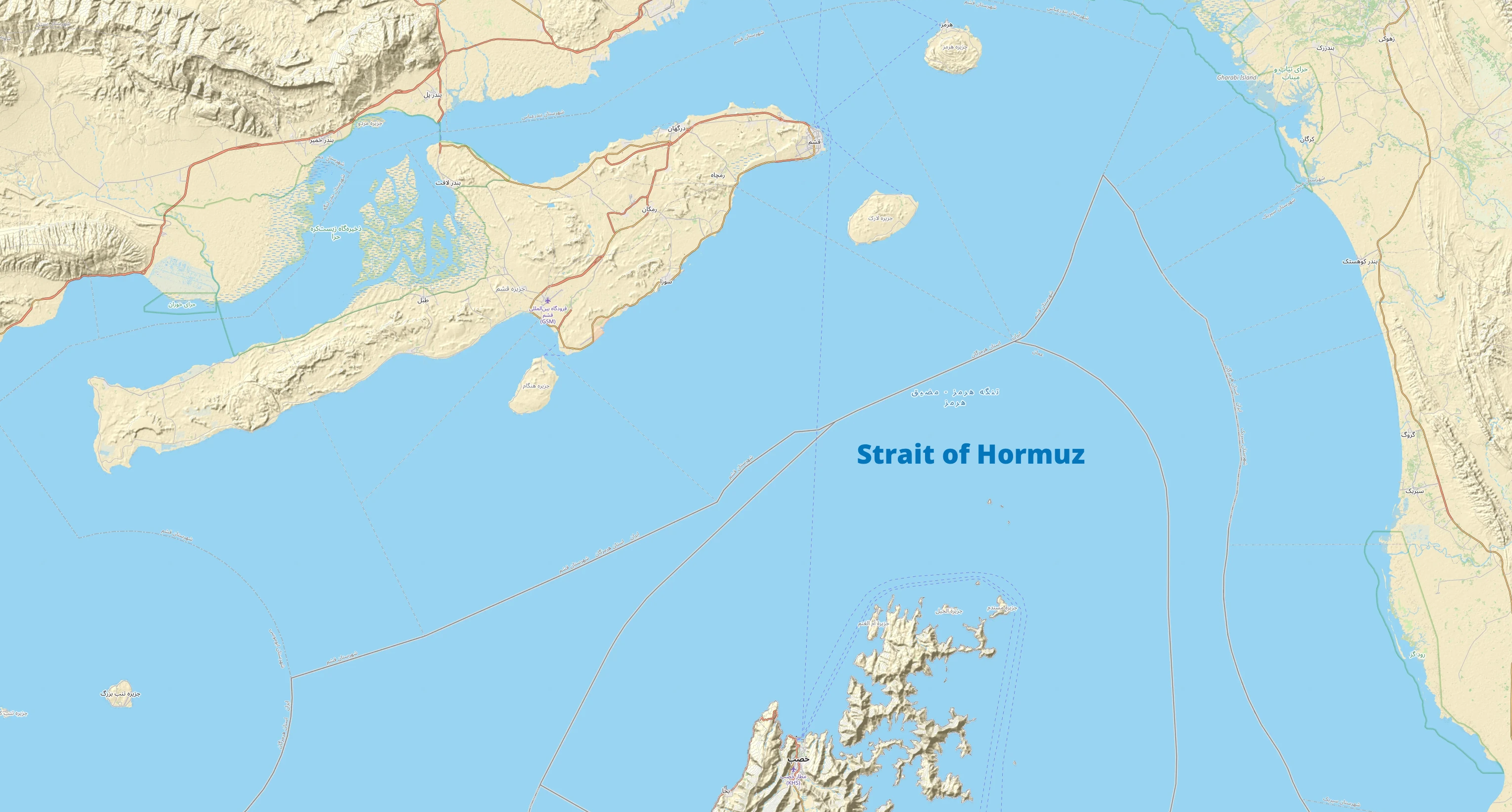
After six weeks of Operation Epic Fury, it appears that the fury is now being put on hold. This week, after a civilizational level threat from the president, a two-week ceasefire aimed at hopefully re-opening the embattled Strait of Hormuz and allowing for a period of negotiations between Iran and the United States was announced. At this writing, there is a multitude of questions yet to be answered. Will the ceasefire extend to Israeli operations in Lebanon? What would an “opening” of the strait look like? Will any of Iran’s ludicrous proposal points be taken seriously during negotiations? These are all questions for another time and another column.
The more immediate concern is what types of signals this ceasefire sends in terms of American resolve. One of the reasons I was (and am) critical of the current operations in Iran was that there did not seem to be a defined set of objectives nor was there seemingly any metric set in terms of either achieving or (at the very least) declaring victory. Previously, President Donald Trump called for Iran’s “unconditional surrender” using the same type of language that emanated from the Casablanca Conference of 1943. However, it now appears that an end to hostilities will absolutely be based on some sort of agreed upon conditions.
The current “pump the breaks” strategy emanating from the White House is likely the summation of two different aftereffects of the Iran conflict. The first being that six in ten Americans disapprove of the actions against Iran. With midterm elections coming up in November and the threat of an impeachment-hungry incoming congress looming, Trump is likely trying to cool things down in the hopes that this unpopular military action will be forgotten by the time voters go to the polls. The second lies with the continued closure of the Strait of Hormuz and the instability it has caused within global markets.
While it’s true that the United States produces more oil than it consumes, oil prices here in the states are still affected by global supply-and-demand trends. One only needs to remember the effect that the 1973 Oil Embargo had on U.S. domestic oil prices. The Strait of Hormuz handles about 20 percent of global crude oil shipping, most of which goes to Asia and Europe. The global price of crude oil has skyrocketed since the end of February which has had a marked effect on the price that Americans have paid at the pump. (Meanwhile it’s bordering pandemonium in parts of Europe.) Iran achieved this economic turmoil through the use of missiles and mines as well as unmanned suicide boat drones, not some grand fleet of destroyers and aircraft carriers. Iran’s ability to disrupt shipping through the Strait of Hormuz was alarming enough for the president to exclaim “Open the Fuckin’ Strait, you crazy bastards” on Easter Sunday.
The past six weeks have been successful in the sense that the Iranian regime has been brutally battered by U.S. airpower. Ayatollah Ali Khamenei and much of the command and control of the Iranian military has been eliminated. However, enough of the Iranian regime exists that they are able to credibly make the traversing of the Strait of Hormuz a dangerous undertaking. This appears to have been enough for the Trump administration to call for a ceasefire and seek a conditional end to hostilities.
What kind of precedent does this set for the future? If Israel launches continued strikes against Hezbollah in Lebanon, does Iran keep the strait closed? What about five years from now? What if America has another showdown with the Houthis in Yemen? Does Iran close the strait as a form of leverage? What if a future round of sanctions is enacted against Iran for who knows what reason? Over the next decade, shutting down the strait could be an irregular and unpredictable phenomenon akin to El Niño. Going forward, why wouldn’t Tehran use the strait as a diplomatic and military trump card when the Iranian government or its allies and proxies are pressured?
More alarmingly, Beijing could look at the past six weeks and conclude that America does not have the stomach for a prolonged showdown over contested waters if it means global economic uncertainty. What is to stop China, with its powerful navy and drone capability that dwarfs that of Iran, from blockading Taiwan if Beijing knows that doing so would absolutely tank global markets, thus forcing an electorally focused American president to cry “uncle”?
If the Trump administration’s newfound insistence on reaching a settlement with Tehran is indeed born out of the fact that Iran has resiliently been able to keep the largely closed, then the current conflict could very well end up being a geostrategic defeat for the United States. Now, to qualify, it is entirely possible that by the time of this article’s publication the White House has exited negotiations and has launched further strikes against Iran. (I have a pretty good record of prescient last minute prognostication.) We will have to wait and see.
It is always important to deliberate how America should enter armed conflict. It is equally important to deliberate how to exit once involved. Some have surmised, for example, that Vladimir Putin might have watched the Biden administration’s bungled withdrawal from Afghanistan in August of 2021 and decided that a full-scale invasion of Ukraine six months later was feasible and opportune. While time will tell if this hypothesis is true, it cannot be dismissed outright. Similarly, if the Trump administration looks for a quick out of the conflict it has placed itself in, will Xi Jinping take note (much to the detriment of Taiwan and our Asian allies)? Time will tell. What is certain, though, is that the remnants of the Iranian regime believe that they have a foolproof break-in-case-of-emergency tool in the form of the Strait of Hormuz. It would be best to dissuade them from that notion.
Jim Pomeroy, raised in Bucks County and a former congressional aide, works in higher education. He is the author of Alliances & Armor: Communist Diplomacy and Armored Warfare during the War in Vietnam.