Governor Shapiro’s budget and the vice economy
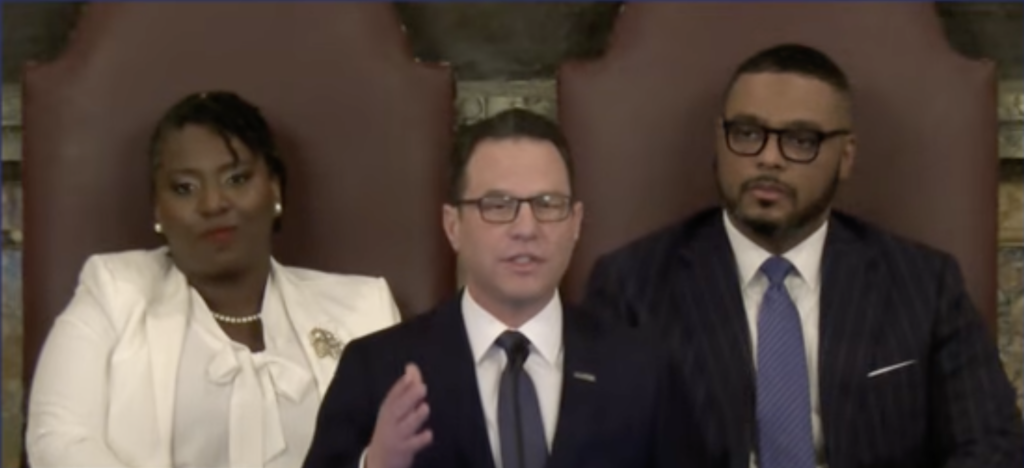
Governor Josh Shapiro’s 2026-27 budget address was delivered with the polished optimism of a man elected to serve Pennsylvania but with his eyes on Pennsylvania Avenue.
To hear the governor tell it, the commonwealth is a shimmering beacon of economic competitiveness and the success of progressive governance. But as the dust settles from the rhetoric and we look at the actual ledger laid out in this week’s address, a troubling picture emerges. To fund the massive expansion of government programs and fulfill campaign promises, the Shapiro administration isn’t relying on traditional economic growth or fiscal restraint. Instead, it is betting the house on the vice economy.
The cornerstone of the governor’s new revenue plan rests on two pillars that were once the hallmarks of social decay: the legalization of recreational marijuana and the endorsement-through-taxation of “skill games.”
For years, the debate over marijuana has been framed by activists as a matter of liberty. But the governor wasn’t looking through this lens (at least explicitly, though there is a political coalition for this issue). Instead he led with the fact that Pennsylvanians are driving to New Jersey and Maryland to buy it. The logic is simple and cynical: If our neighbors are profiting from a social ill, we must do so as well, lest we fall behind.
The administration projects $1.3 billion in new revenue over five years from cannabis. But what is the true cost? We are told this is about “highly regulated industries,” yet we ignore the downstream effects on public safety, workplace productivity, and the mental health of our youth. By directing the state to an endorse the distribution of a psychoactive drug, Pennsylvania is trading its long-term social fabric for a short-term infusion of cash. It is an admission of failure — an acknowledgment that our leaders can no longer figure out how to grow an economy, so they must harvest the habits of those addicted.
Even more egregious is the governor’s sudden pivot to “skill” games — the gray-market slot machines now seemingly in every convenience store, beer distributor, and bar across the commonwealth. Previously, many in law enforcement and the legislature viewed these as unregulated nuisances that preyed on the poor and undermined the integrity of our established gaming industry (however you feel about it).
Now, however, the governor has seen the light — or rather, the tax revenue. Instead of outlawing these machines, he seeks to charge the Gaming Control Board with regulating these 70,000 terminals to get a cut of the action. These games have been a massive expansion of gambling that now can turn the commonwealth into a silent partner in every lost paycheck and every squandered Social Security check.
What does it say about the state of our commonwealth that our “innovation” strategy relies on this vice economy instead of looking to leading voices in the House and Senate — and even the private sector — to build a tax code that encourages manufacturing, a regulatory environment that empowers small businesses, and an education system that prioritizes merit over bureaucracy?
When a state begins to rely on the vices of its citizens to balance its books, it loses the moral authority to lead those citizens. We are no longer a commonwealth built on the “arsenal of democracy” or the “industrial revolution” the governor so fondly cited. We are becoming a state that functions as a dispensary with knock-off casinos.
Turning a blind eye to the social costs of marijuana and gambling isn’t “moving at the speed of business” — it’s a slow-motion retreat from the values that made Pennsylvania a leader in the first place.
Publius Pax is a tenth-generation Bucks Countian, political consultant, and author.