A silver-lining in Lebanon?
It seems as of this writing that the U.S. military campaign in Iran is on an indefinite hold. Shipping through the Strait of Hormuz has been further hampered by a dual blockade declared by both Washington and Tehran. Talks in Islamabad aimed at ending the conflict have seemed to falter and U.S. domestic gas prices remain considerably higher than they were a year ago. A key factor in the current impasse lies not in Tehran, however, but in Beirut.
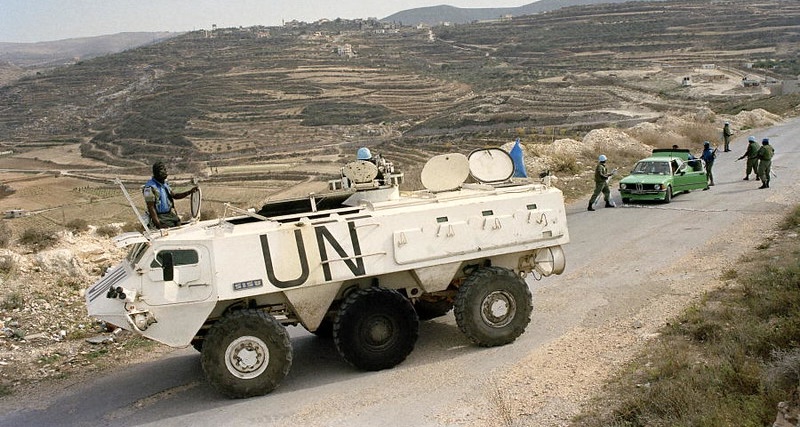
Since the 1980s, Hezbollah has operated as a state within a state in southern Lebanon. As Iran’s most potent and well-organized proxy, Hezbollah has been at the tip of spear when it comes to Tehran’s quest to bloody Israel. Even after the Lebanese Civil War formally ended in 1990, Israel maintained a security force in southern Lebanon to deter Hezbollah. When this security force left in 2000, Hezbollah marched south of the Litani River and right up to Israel’s border. For the past 26 years, Iran’s proxy in Lebanon has carved out a fiefdom in the south of the country despite it being the sovereign territory of the Lebanese government. Even more frustratingly, the United Nations Interim Force in Lebanon (UNIFIL) has been deployed to south Lebanon since 1978 as a means of “peacekeeping.” To date, UNIFIL has never been able to pacify southern Lebanon. It’s ironically hilarious that UNIFIL’s mission is set to end this year despite having been unable to accomplish anything of note.
A logical question would be: How is it that the Lebanese Armed Forces have been unable to assert control over southern Lebanon and deny its usage as a Hezbollah safe haven? A complete answer to that question would require its own column. Generally speaking, it is due to the inherent weakness of the Lebanese state. Emerging from a brutal civil war that rocked the country from 1975-1990, the Lebanese government has never fully recovered. Assassinations of leading politicians, brief invasions by Israel, inherent government corruption, and religio-ethnic sectarianism are just a few of the factors that has left the ruling government in Beirut in a precarious position for going on four decades. By transitive property, the Lebanese Armed Forces have been afflicted top-to-bottom with the same ills that have infected the elected government.
Accordingly, Hezbollah has in effect claimed dominion over southern Lebanon for almost thirty years. The Lebanese Armed Forces and UNIFIL have been feckless in preventing them from doing so, thus putting the onus on Israel to check Hezbollah’s ambitions. This came to a climax immediately after the Hamas attacks of October 7, 2023. In a bid to help its other Iran-backed proxy in the region, Hezbollah launched barrages or rocket attacks from southern Lebanon into Israel. Israel has since tried, once again, to excise Hezbollah put of its safe havens through the use of conventional military incursions as well as much more unconventional means (such as the “Grim Beeper” operation). Much of Hezbollah’s leadership, including its longstanding Secretary General Hassan Nasrallah, has been eliminated in various strikes and operations since 2023. However, Hezbollah has still been able to conduct missile strikes on northern Israel. Such strikes increased last month as Israeli-U.S. warplanes began their campaign against the Iranian regime.
Continued fighting between Israel and Hezbollah has stalled U.S.-Iran talks regarding ceasefires and the Strait of Hormuz. Iran views the conflict in Lebanon as an extension of the current showdown over the Strait which means that any talks with the U.S. would need to simultaneously address both conflict zones. The U.S. views Lebanon as unrelated. Thus one reason for the ongoing impasse.
However, it is possible that unfolding talks between Lebanese and Israeli officials in Washington D.C. could provide a silver lining in a seemingly intractable conflict. Starting on April 14, the U.S. began mediating talks between the Israeli and Lebanese governments. Two days later, Israel agreed to a ten-day truce with Lebanon. A new round of talks began last Thursday despite protestations from Hezbollah. It is important to note that the Lebanese government has been trying for almost seven months to disarm Hezbollah and assert control over the south of the country. The current government in Beirut under President Joseph Auon has no sympathy for Hezbollah and wishes that the troublesome Iranian proxy would vacate Lebanon. But, once again, Auon’s government lacks the cohesion and strength to do this alone. This is what makes the talks so interesting. Could it be that in exchange for Lebanese recognition, Israel might help the Lebanese Armed Forces sweep Hezbollah out of Lebanon? This would be a very positive outcome of the current regional conflict. The fact that Hezbollah’s protestations have yet to deter these talks in Washington shows both that Hezbollah’s capabilities remain damaged and that the Lebanese government does not believe that Hezbollah holds ultimate veto power at the moment.
Hezbollah is responsible for a litany of terror attacks both in theregion as well as overseas. It is also a gangster proxy of Iran that uses murder, extortion, and drug trafficking as a means of staying in power. Lebanon and the region would be better off without the “Party of God.” If there is success to be had from the ongoing pressure on Iran, let the neutering of Hezbollah and the strengthening of Lebanon’s sovereignty be the first items on a hopefully comprehensive list.
Jim Pomeroy, raised in Bucks County and a former congressional aide, works in higher education. He is the author of Alliances & Armor: Communist Diplomacy and Armored Warfare during the War in Vietnam.