Shapiro approves using capital assistance funds for SEPTA’s daily operations
SEPTA’s existing service lives for another day.
Actually, for another two years.
Gov. Josh Shapiro has approved the request from the Southeastern Pennsylvania Transportation Authority (SEPTA) to use up to $394 million in capital assistance funds for daily operations.
The move comes in response to a letter from SEPTA General Manager Scott Sauer to PennDOT requesting the flexibility and Secretary of Transportation Mike Carroll approved the funding following Shapiro’s direction.
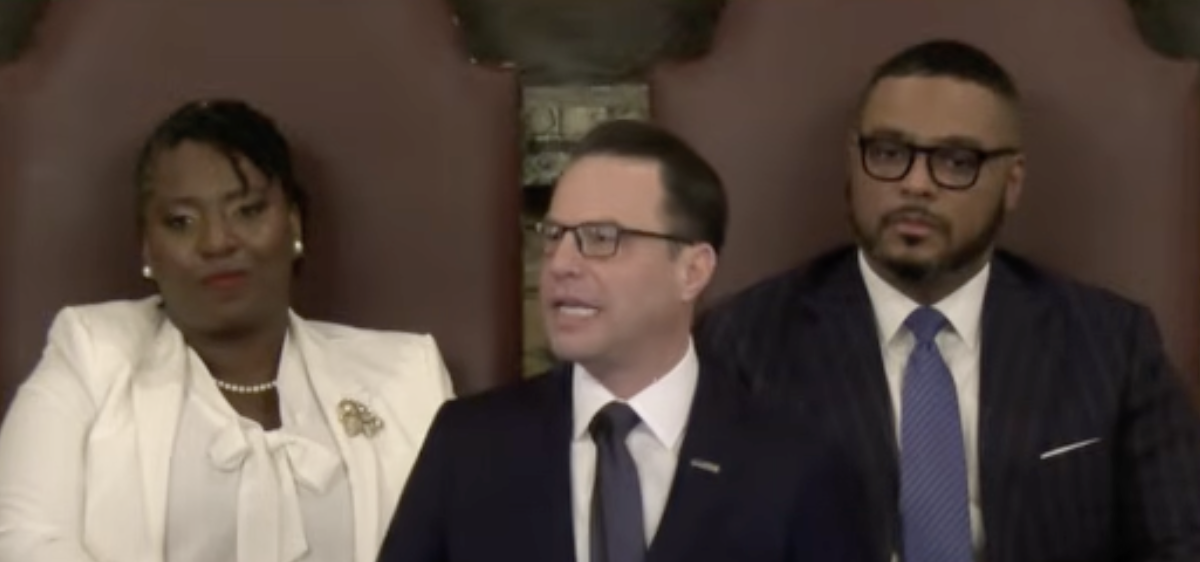
Speaking during a gaggle in Philadelphia, Shapiro made it clear that the move was within his purview and that he has seen firsthand how the cuts had impacted the region.
“We have seen how critically important SEPTA is for years and years and years, but particularly over the last couple of weeks, after some of their cuts went into effect, folks were struggling to get to work and wondering how they were going to get to their destination, get their families where they needed to go,” he said. “Sixty-three percent of Philadelphia schools saw increased late arrivals, and 50% saw higher absenteeism. I must tell you that that really tugged at me, and in my conversations with Superintendent [Tony] Watlington, it was just clear to me that is not something we can allow to continue.”
SEPTA is facing a $213 million budget deficit and had instituted austerity cuts, including closure of 66 stations, the elimination of 50 bus routes and five regional rail lines, and a 20 percent reduction in service on all remaining routes.
The Shapiro administration have taken measures to support SEPTA, Pittsburgh Regional Transit (PRT) and other mass transit agencies in the Commonwealth. The governor’s FY26 budget included $292 million in new funding, but Republicans in the GOP-controlled state Senate have been reluctant to sign on.
“I have repeatedly called on the legislature to act,” said the governor. “This has gone on now for more than two years. Two budgets in a row, I’ve asked them to pass recurring revenue. The House of Representatives has passed that on five separate occasions when it didn’t get done because the Senate didn’t act. I flexed $80 million in short term revenue for SEPTA, and then again, flexed another $153 million to keep SEPTA afloat.
“I think we have come to the conclusion here that the Senate Republicans, who are in the majority in the state senate, were unwilling to pass recurring revenue. The Chairman of their appropriations committee said that a week ago when he said a long term solution is not going to happen. I think that, combined with the court case, led SEPTA to realize that because of the Senate’s intransigence, because of their unwillingness to pass recurring revenue, they needed to search for a different way forward.”
Carroll addressed the stalemate in his letter to Sauer.
“Unfortunately, Senate Republicans have refused to agree to a long-term solution that provides certainty and does not also unfairly raid mass transit capital dollars for unrelated expenditures – and the Shapiro Administration believes Pennsylvanians who rely on SEPTA deserve service that helps them get to work, school, or wherever they need to go.”
In the letter, Secretary Carroll explains why the Senate-passed legislation fails to meet the needs of SEPTA and other mass transit agencies:
“First, it would have provided a fraction of the funding that the Governor proposed as part of his proposal to provide new funding for system operations. Second, it would have required these systems to utilize their capital funding over two fiscal years to fill the gap without a revenue source to replace the lost funding they are already relying on for capital projects. Third, it would have taken funding away from capital projects already underway, thereby compromising the safety and efficiency of the transit system. Fourth, this Senate-passed bill would have only provided a temporary fix, at a time when systems are seeking assurance that the Commonwealth can provide long term sustainability to their operations. Fifth and most concerningly, this bill would have taken existing resources out of the PTTF (Public Transportation Trust Fund), in the amount of $419 million, and sent them to the Motor License Fund for road paving projects. While PennDOT and the Shapiro Administration support funding for road repair projects and have allocated significant resources to that work, we do not believe utilizing mass transit funding for such purposes is sound public policy.”
Instead, SEPTA requested to use up to $394,000,000 of their current FY2025-26 capital assistance allocation that has yet to be obligated — not previously committed funding. As a result, this request will not redirect PTTF dollars that are committed as was contemplated in the Senate-passed legislation.
As a condition of its approval of SEPTA’s request, the Shapiro Administration instructed SEPTA to continue to address its structural challenges and report to PennDOT every 120 days the steps taken and progress made to increase efficiencies within the system.
“These next two years will allow the new leadership of SEPTA – both the new board leadership and the new professional leadership – to put in place the reforms that they want to put in place, to be able to create the efficiencies that they need to create, to remove the duplications and other things that I think have slowed SEPTA down in recent years,” said Shapiro. “So by giving SEPTA these two years, I think we also usher in an opportunity for real reform and real change.”
The governor also called on the General Assembly to conclude its work on the budget and put an agreed-upon spending plan on his desk.
“Now is also a time for the state senate to close the deal on the budget. The issue that they had been highlighting as a reason to not get it done is now off the table. It is time to close this out.”
Speaking on behalf of Senate Democrats, Leader Jay Costa (D-Allegheny) commended Shapiro and Carroll while taking another swipe at his colleagues across the aisle.
“Senate Democrats commend Governor Shapiro and Secretary Carroll for taking the leadership and making the hard decision to provide SEPTA badly needed funding to avoid continuing the dramatic service reductions that we’ve seen over the last few weeks,” said Costa in a statement.
“We, along with the Governor and the House Democrats, have been trying to negotiate a solution to the transit crisis over the last three years, and in particular, the last 6 months. The Senate Republicans are indifferent, even hostile, to the needs of our cities.”
Costa noted that fulfilling SEPTA’s request was not the best option, but the final one that was available.
“So today, the Governor and PennDOT took the last, worst step that was available and accepted SEPTA’s request to access capital funds intended to provide for safe and efficient transportation service and to divert them for operational needs to restore the transit service that Philadelphia runs on. This is not ideal, but is necessary, and we applaud the Shapiro Administration for taking this bold action.”
Steve Ulrich is managing editor of Politics PA.