Chris Holbert: A better way forward on cannabis for Pennsylvania Republicans
When I arrived in the Colorado Legislature in 2011, I would have dismissed the suggestion that a conservative Republican like myself would ever help lead efforts to legalize cannabis. Like most of my colleagues and the majority of constituents I represented, I voted against two amendments to the Colorado Constitution that legalized marijuana. Despite my opposition, a majority of Colorado voters approved a ballot measure legalizing medical marijuana in 2002. Ten years later, a majority in the legislature voted to legalize adult-use marijuana.
I learned from experience that governing can require a legislator to confront uncomfortable realities when the public is already there on an issue — and sometimes those realities change minds. This didn’t just turn out to be good policy, but it was also good politics for Republicans. No Republican lost a primary or general election on the issue and leadership votes in our caucus were gained rather than lost.
Now, as Pennsylvania Senate Republicans face mounting political pressure to address cannabis policy, just as I did a decade ago, I urge them to learn from the Colorado example and to embrace a fundamentally comprehensive approach: effective regulation rather than continued prohibition. I am not suggesting that Pennsylvania should mirror how Colorado regulates cannabis, but I encourage Republicans in the Commonwealth to take a more effective approach.
As conservatives, we can generally agree that government governs best when it governs least. Pennsylvania Republicans should avoid regulating cannabis in different ways depending on the intended use of a given cannabis plant. Colorado regulates some cannabis as medical marijuana, other cannabis as recreational marijuana, and cannabis that meets a 79-year-old federal definition of hemp through a third regulatory cannabis framework. That complexity leads to uncertainty, confusion, and certainly doesn’t govern best. Prohibition is Big Government.
Loopholes in federal law have led to the sale of unregulated, psychoactive hemp-derived products in gas stations, convenience stores, and online — often with “click a button” age verification. While some might dismiss hemp as a weak cousin to marijuana, that perspective is far outdated and ignores the abilities of modern technology.
Since 1946, our federal government has defined hemp as cannabis plants that contain no more than 0.3% delta-9 THC on a dry weight basis. Since then, the federal government has distinguished hemp from marijuana based on the quantity of that one cannabinoid. Delta-9 THC is the commonly understood psychoactive cannabinoid.
Today, we know that there are at least two other cannabinoids that, when adequately concentrated, can cause psychoactive effects: delta-8 THC and delta-10 THC. There are also synthesized variations, which might be labeled as “THC-0” or similar terminology. Synthetic cannabinoids are not natural hemp products — they are chemically altered drugs. These substances are not naturally occurring — they are manufactured using harsh chemicals and solvents, often overseas.
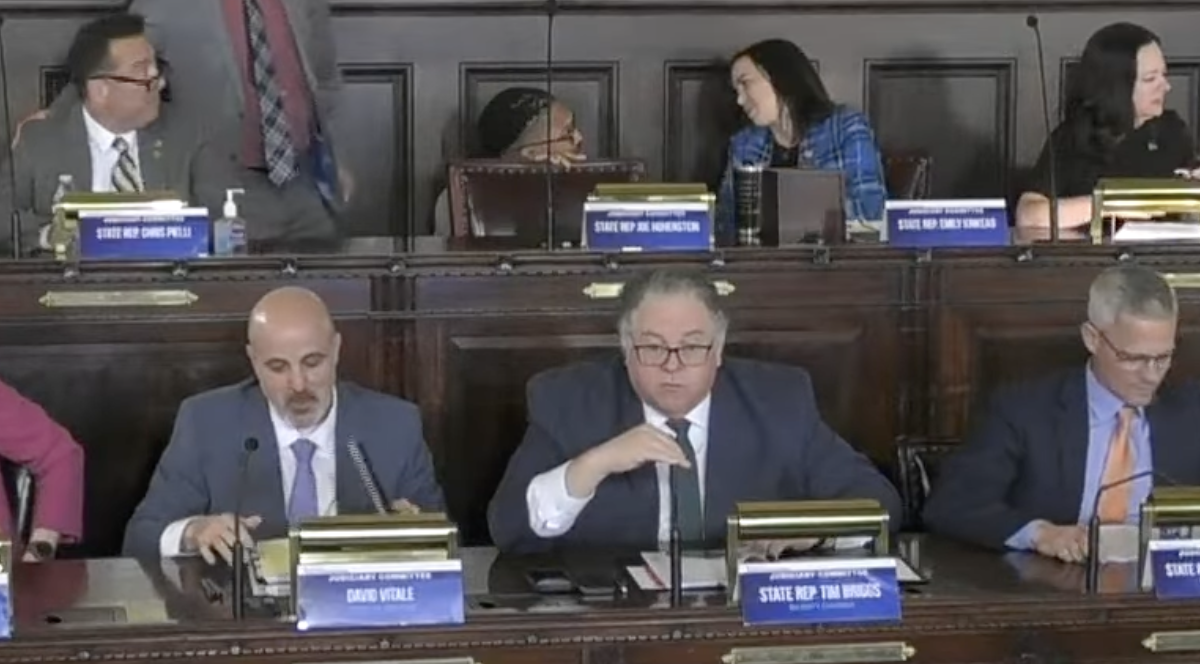
But cannabis regulation has traditionally relied solely on a measure of delta-9 THC. Thus, those other cannabinoids often fall outside of statutory or regulatory control. Lawmakers recently met in Harrisburg to debate these psychoactive hemp-derived products, also known as intoxicating hemp or synthetic THC. The state is among only eight other states without any regulation for such dangerous intoxicants.
Pennsylvania Needs Regulation
I encourage Pennsylvania lawmakers to consider regulating all cannabis products based on products that contain psychoactive cannabinoids and those that do not. All products that contain psychoactive cannabinoids should be subject to the same testing, labeling, and packaging requirements. Products that do not contain psychoactive cannabinoids such as CBD, textiles, and rope can be subject to far less stringent regulation.
This approach addresses the intoxicating hemp program. And, for Republicans, adult-use cannabis legalization provides the clearest public safety protections and most effective enforcement mechanisms to curb the problem of intoxicating hemp which dominates Pennsylvania gas stations, convenience stores, and retail outlets. An adult-use program would ensure that only tested, safe products are available for purchase in dispensaries, where ID checks would be enforced, thereby removing dangerous, untested products from general circulation.
A free market for Pennsylvania
Senate Republicans have the chance to apply fiscal conservatism, personal responsibility, and free market thinking to a unique and more effective cannabis regulatory framework. One that would, in my opinion, better protect Pennsylvanians while respecting individual liberty.
There are three legalization bills in front of lawmakers. I commend two Republicans who have notably taken leadership on this issue – Sen. Dan Laughlin (representing Erie) and Rep. Abby Major (representing Armstrong and Westmoreland.) Both lawmakers have sponsored legislation to create regulated legalization frameworks for Pennsylvania and I’d like to see Republicans embrace this momentum.
Rather than just say no, I encourage all Pennsylvania Republicans to govern best by legalizing cannabis now. It’s good policy, good politics, and the right thing to do.
This piece originally appeared in Broad + Liberty.
Chris Holbert served as a Republican state representative (2011-2014) and state senator (2015-2022) in Colorado, which began state-licensed retail marijuana sales in January 2014. During his time in the Colorado Senate, he was elected as Senate Majority Leader (2017-2018) and was twice elected unanimously as Senate Minority Leader (2019-2020 & 2021-2022). Subject to term limits, Chris and his wife moved to Florida in 2022.