Can we change our inflammatory politics?
Is this a time like no other?
A week ago, thousands gathered in a packed Arizona stadium to honor the slain conservative leader, Charlie Kirk, silenced by a bullet because of what he said about his beliefs.
Two days later, President Donald Trump talked bluntly to world leaders at the United Nations, admonishing them for not protecting the integrity of their borders, for doing business with the enemies of freedom, and watching aggression on their doorstep.
And now another deadly shooting directed at an Immigration and Customs Enforcement facility in Dallas, Texas.
Aggressive, inflammatory speech is surely on the rise. And a million times over our political leaders say: Tone down the rhetoric, stop the hate! We’ve seen how words inflame the deranged; words also create dissension, division and death. What will it take to change this? Or are we destined to function in a tumultuous society, to settle for this? Will political violence so dominate the news that we will become desensitized?
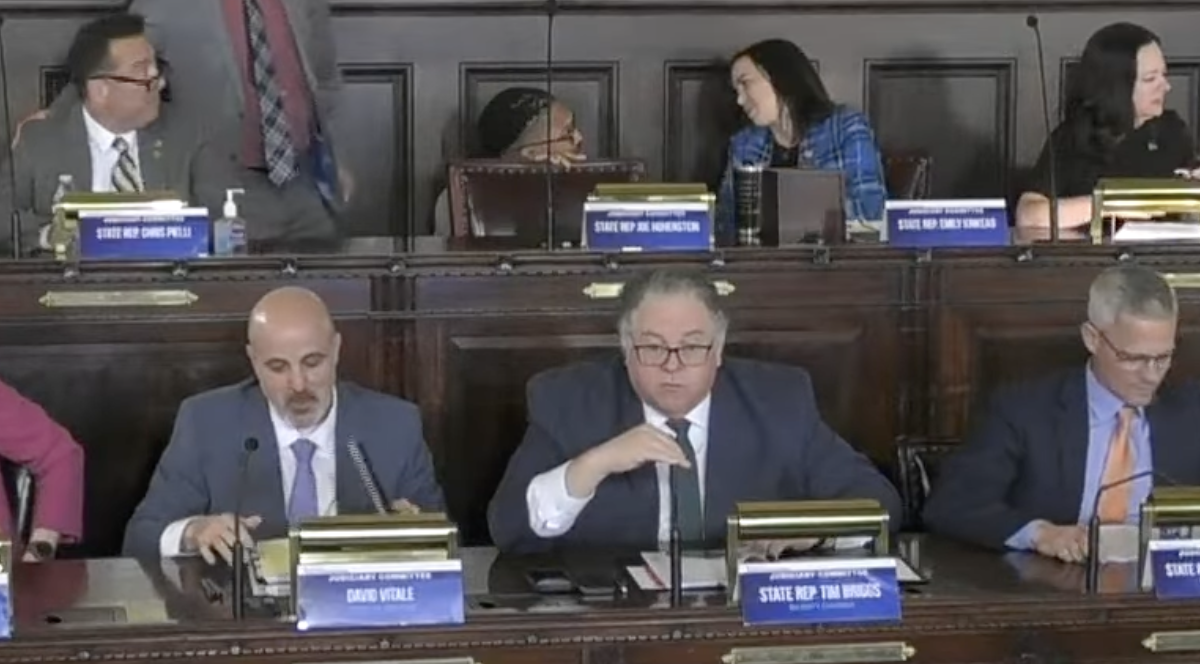
Earlier this week, a Bucks County state senator was my guest on Speak Your Piece on WBCB 1490 to speak about politics and government, but he also spoke about nasty rhetoric in his political arena. For one thing, he said it has never been more vitriolic, uncompromising, and unproductive in Harrisburg — and he has served as a state legislator for seventeen years.
“It’s a food fight,” said Senator Frank Farry (R-Langhorne), who also blasted Democratic state legislators for fighting for power and political advantage rather than working on the business at hand — the long-overdue state budget, for instance.
Farry points out the impact of the delay affects people, school districts, educational planning, and social services. It also strains needed food banks in Bucks County and elsewhere.
He notes that the inability to reach an agreement for nearly three months has much to do with “power,” which translates to seats in the legislature. The Republicans have a four-vote advantage in the State Senate, while the Democrats have a one-vote edge in the House. This division apparently fuels political machinations in Harrisburg and impacts the business of the voluminous state budget.
However, the anger and political wrangling is a mirror image of what we see nationally — in the streets and in the hallowed halls of Congress. That federal institution is worse perhaps, with radical, noisy Democratic caucuses that seem to hate the president most of all while trying to fill the leadership vacuum with themselves.
But the words we hear from some leading Democrats, radicals, and influencers are very dangerous names and associations. For example, “Hitler, fascist, and Gestapo” are labels tossed at the president, cabinet, and federal ICE agents. It burns into daily political lingo, stirs up the weak, and, as we’ve seen, incites their anger and fear.
Nationally, what is going on in America is definitely more than a food fight — it’s a war of ideals and ideas.
This is a certain crisis. Responsible Americans react to it by condemning the violence and inflammatory rhetoric, engaging instead in civil discourse. But we need to do more.
Pat Wandling hosts Speak Your Piece weekdays at noon on WBCB 1490.